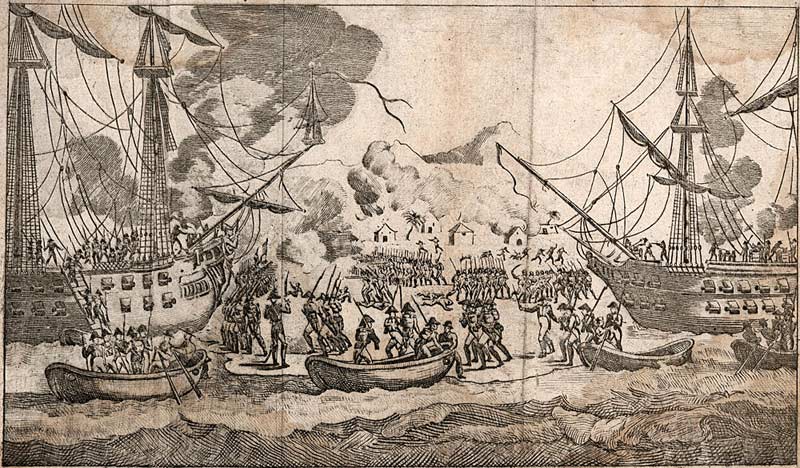
It is true that in our study of the French Revolution we have seen ideology and the cause it supports weakened by contradiction. From the men of Mountain quickly turning on one another after they cried for fraternity to Napoleon turning back the clock on many reforms that occurred during the Revolution, the leaders of these political upheavals spoke of new directions but their actions brought them in line with the policies they fought to overturn. The Haitian Revolution was no different in this respect. Toussaint L'Ouverture, freed slave and leader of the Haitian Revolution, had his own contradiction. It was Toussaint that lead the struggle against slavery and French domination, rallying the enslaved of Saint-Domingue with the lure of freedom and self-rule. After all the plantations had been burned, the oppressors driven out and the western provenance of Saint-Domingue, which was essentially independent, it came time to figure out how to govern the country and to re-build Haiti's economy. Before the revolution, Saint-Domingue was incredibly wealthy, relying on the free work of slaves to harvest sugar cane and coffee. Sugar cane, in particular, was a valuable crop and Haiti had become the main source for this lucrative good. Recognizing the financial potential in sugar cane, Toussaint L'Ouverture reasoned that if he could restore the sugar trade, Saint-Domingue's economy would once again thrive and its people prosper. However, the former slaves did not want to go back and work like they had for so many years, they wanted to be free and this meant making the choices that had been denied them for so many years. Many wished to live a simple life where they grew food for themselves. In the eyes of Toussaint, such a lifestyle could not bring the economic and political strength that came with financial prosperity, and soon the "former" slaves were forced to go back into the cane fields and harvest the sugar. Toussaint L'Ouverture hoped and believed that a stable economy would bring peace to the island, however he did not take into account the long term repercussions of his actions and the ensuing political fallout.
In 1802, France sent a large fleet which anchored in the Haitian port. For three months Toussaint attempted to fight the French army, but the original enthusiasm for the cause, itself anchored in the push to throw off the shackles of slavery, had been lost with the forced return to the cane fields. The people realized that the change they were originally promised was not going to happen. The Haitian Nationalism, much like the French Nationalism, that had inspired the slaves to revolt against the tyranny of an unjust system, began to decline, disillusionment replacing ardor. How important was Haitian Nationalism? When looking at the events after L'Ouverture's imprisonment, it is clear that the Haitian people had the ability to defeat the French when they believed their freedom could be gained. But the sacrifices made had to carry with them the promise of change. Without that change, there was no reason to carry on the cause. Had L'Ouverture found a different way to stabilize the economy, he may have been there to see his country finally free.