There are many things that the industrial revolution is known for, between revolutionizing inventions like the steam engine and the new norm of gender segregation, the industrial revolution has much to offer. A major questions when looking at the industrial revolution is, "Did it end up benefiting people?". Along with the all the new innovations came a spotlight on problems that already existed, which lead to a large movement to solve them, making the world a better place.
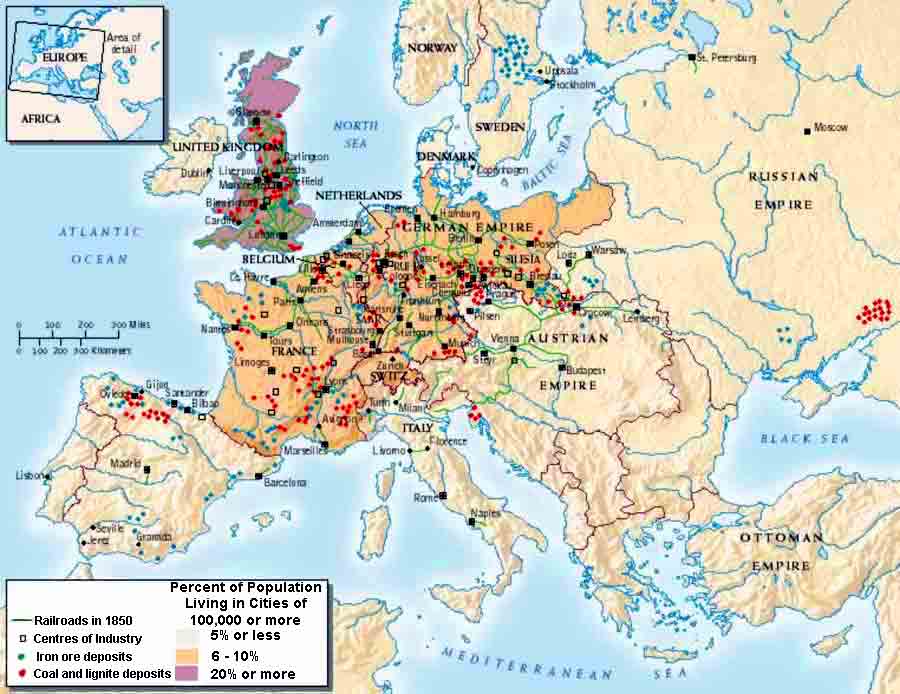
The industrial revolution, first and foremost, affect the sheer density of the population in cities. As you can see in this map, the population living in cities was outrageous. The cities were not built to hold the amount of people they had to, and as factories began moving to the cities they got more and more crowded. The second large issue was cleanliness, or lack there of. Children would play in mud and people would drink water form the rivers that factories dumped their waste into. Going hand-in-hand with cleanliness was disease. The crowded cities were breeding grounds for diseases like cholera, typhoid, and typhus. At the time no one knew what caused such diseases, let alone cure them, so the epidemics wreaked havoc on the crowded, dirty cities. The final missing item in these cities were public transportation. Without public transportation workers had to stay condensed in the central city areas, enhancing the other problems even more.
For the first time it became crucial for solution to be found. Through this we received urban planning, the germ theory, vaccines, public transportation, and general cleanliness. Although many blame the industrial revolution for causing all the problems they were there before, the industrial revolution merely shined a light on them. This gave way to solutions. It seems that humans become most proactive when the situation is dire. Perhaps we will have another "revolution" of solutions as our fossil fuel slowly runs out and an alternative is needed.