With the Napoleonic Era on the horizon an imminent question hangs in the air: was the French revolution successful? That is not the question I’m going to answer today; however, I would like to look at the structure that the French government tried to maintain throughout the revolution.
The most prominent man elected to the French government was Maximilien Robespierre. Robespierre was credited with the Reign of Terror, where anyone suspected of treason was thrown into prison or sent to the “revolutionary razor”, coincidently his life was ended by the very same contraption. The French’s “democratic” government seemed to fall apart after Robespierre’s death. Why was America able to create a truly democratic government and France was not? The reasons are innumerable; while America was fighting against another nation France was fighting against itself, the American way of thinking was not as violent and radical as France’s, and, perhaps because they were the first to revolt America was more tentative in it’s ideas. It seems that the way France’s government was created lent itself to needing a strong leader, like Robespierre. Although this is the opposite of a democracy France’s ideals about freedom were a little skewed any way (Robespierre’s murder of men who spoke out against him seems like a blatant disregard for freedom of speech), the moment Robespierre was gone things began to go down hill.
France’s success was built around two emotions: spirit and fear. Both of these feelings are unpredictable and can easily become wildly out of control. For an entire nation to go around hyping each other up about revolutionary ideas was a ticking time bomb, one that Robespierre kept it under control with an iron fist. This form of government, which is dependent on a strong leader cannot last, as shown by the French Revolution. This situation is deja vous from when Louis XV died and was replaced by his son who said, “ What I should like most is to be loved”. Louis XVI was weak and the result of that was the fall of the French monarchy. My question is what do you think keeps governments that depend on a strong leader running when a weak leader is in power? With it’s government structure was there any way that the French revolutionary government could have continued? What changes would have had to be made for the government to last?
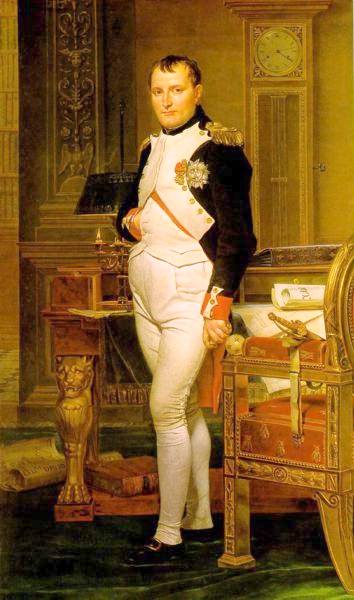
Personally, I think that governments like monarchies are held firmly in place by a few things. The first is previous leaders, if there had been a few strong leaders before the weak one people may be willing to hold on to a government that has worked in the past. The second is precedent; although this was shaken when people began to revolt I think that the tradition of a government form keeps the people faithful as well. The third aid is a secondary lawmaking body like Parliament, which can support a weak monarch and instill hope within the people. I think the high emotion the French people were running on was bound to come back and bite them; eventually, fear and spirit are no way to run an effective government. I think that if the French government wanted to continue on it’s trajectory to democracy and freedom that they would have had to make some serious reforms, like America did to the Articles of Confederation. They hadn’t spent much time thinking about how, functionally, the government would really work, making it strong leader dependent. And that is where Napoleon comes in.


No comments:
Post a Comment